All Articles

Technical Library

Technical Articles

Browse by pathway, topic, and engineering question — and start with the pathway that matches your current decision stage.

RE Archive Pathway Filter
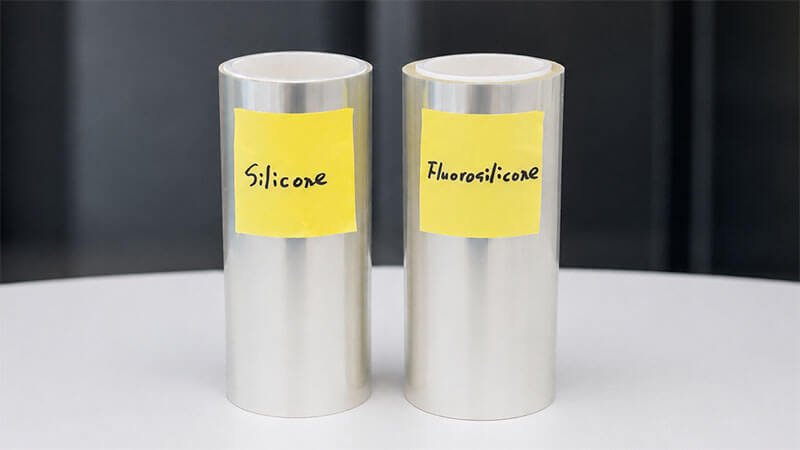
Two release liner rolls side by side labeled Silicone and Fluorosilicone
Silicone vs. Fluorosilicone Release Coating
Fluorosilicone is not automatically better. This article shows when coating chemistry is a real selection variable.
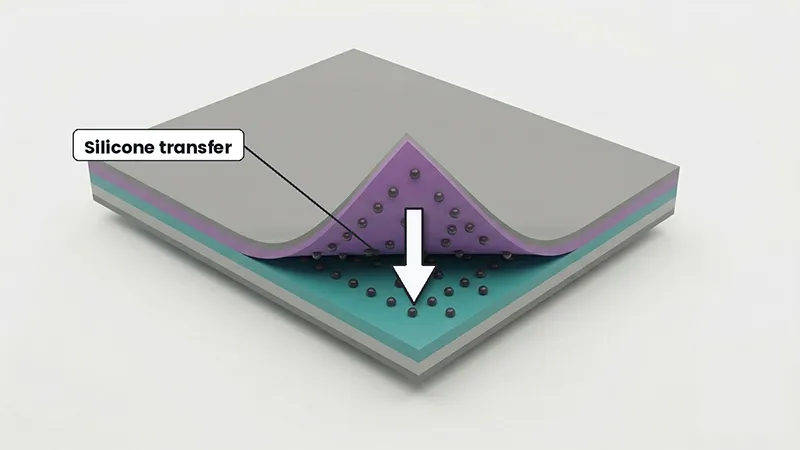
Cutaway diagram of a release liner laminate with an arrow labelled "Silicone transfer" pointing from the silicone release-coating layer to the adhesive layer, where scattered dark particles mark the interface
Silicone Transfer Risk and Liner Selection
A clean peel does not always mean a safe surface. This article explains when transfer risk is a selection-level decision.
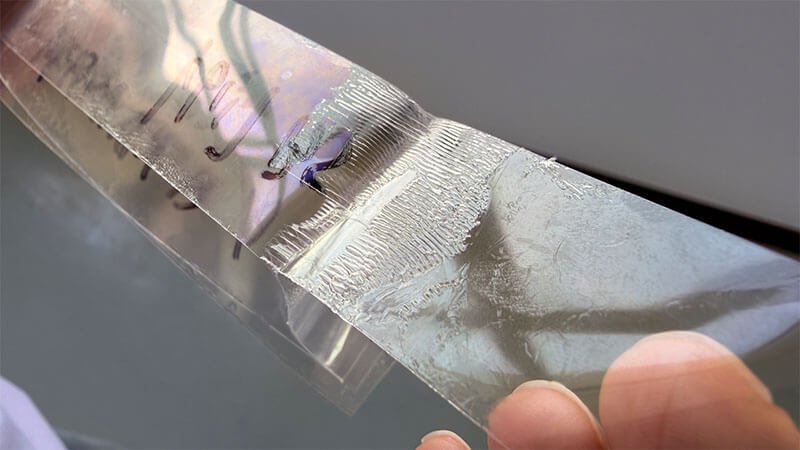
Close-up of a transparent release liner being peeled from an adhesive sample, showing visible residue or transfer marks after liner removal.
Silicone Transfer or Residue After Liner Removal
Transfer or residue does not automatically mean the liner failed. Learn what to check first before changing material or process direction.
A medical island dressing lying flat with one half of its release liner peeled up to reveal the adhesive and central pad beneath
Medical Liner Selection Before Qualification
Medical liner selection should not start with peel force alone. This article defines the practical starting criteria first.
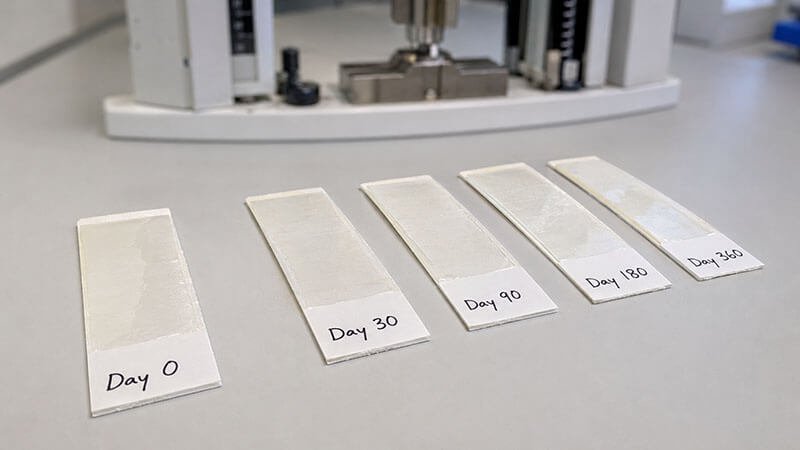
Release liner aging test samples labeled Day 0, 30, 90, 180 and 360
Day 0 Is Just the Start
A passing Day 0 result confirms one moment only. This article explains why initial data is a starting point, not validation proof.
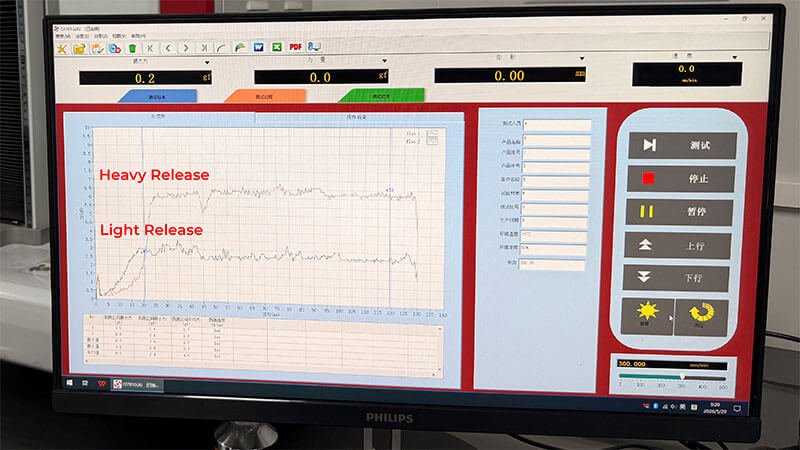
Peel test software screen with two release force curves labeled Heavy Release (higher) and Light Release (lower)
Light and Heavy Release: Why the Numbers Don't Translate Directly
“Light” and “Heavy” are often used too loosely. This article explains what those labels actually tell you.
Thick stack of qualification documents on an office desk
How Much Qualification Support Should You Expect?
Not every program needs the same support depth. This article explains when basic documentation is enough and when deeper support becomes relevant.
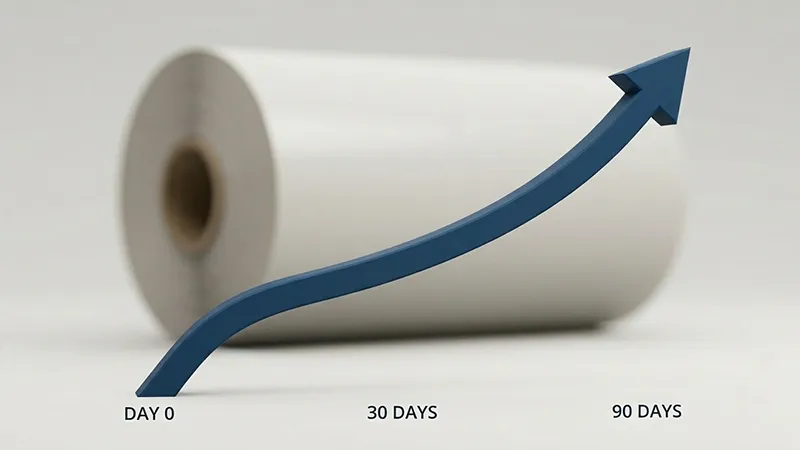
Three-dimensional blue arrow rising past time markers labeled Day 0, 30 days, and 90 days, in front of a blurred white release liner roll
Early Compatibility Screening for Silicone PSA
A T-zero pass can be misleading in silicone PSA work. This article explains why early screening must be read differently.
Diagram of the multi-variable check — three independent observables (peel force, release behavior, and adhesive-side outcome) each answered on its own, then combined into a single decision-grade judgment
The Multi-Variable Check
Three acceptable results do not automatically mean the system is validated. Learn how to judge force, behavior, and transfer together.